
This article gives an overview of how energy demand from data centers and artificial intelligence (AI) is modeled in the En-ROADS Climate Solutions Simulator, how to simulate growth scenarios for the data center industry, and the impact data centers have on greenhouse gas emissions and the climate. Watch the video below for a summary.
TABLE OF CONTENTS
- Background
- Basic navigation of data centers and AI in En-ROADS
- Advanced navigation: Data center growth key feedbacks and assumptions
- Big messages from AI and data centers in En-ROADS
- Acknowledgements and funding
- Footnotes
Background
What are artificial intelligence (AI) and data centers?
Artificial intelligence (AI) refers to computer systems capable of performing tasks that typically require human intelligence, such as generating images and text, translating languages, and making recommendations. Training and running AI models takes enormous amounts of computing power.
That computing power is supplied largely by data centers: facilities housing specialized processors, storage systems, and networking equipment, along with critical cooling and power infrastructure. Until recently, computing infrastructure was often local, with servers housed in office buildings or regional facilities. The rise of cloud computing and AI has shifted this toward hyperscale, centralized data centers, some covering over 10 hectares, that require a vast and uninterrupted supply of electricity.
AI is a major driver of growing data center industry demand, but data centers serve more than AI alone. They also support cloud computing and storage, internet services, web hosting, financial transactions, and more. An online payment transaction or a search engine query is processed by these servers.
How does growth of the data center industry impact energy and emissions?
Over 80% of a data center's lifetime energy use comes from operations: the electricity needed to train and run AI models and keep servers cool. A single hyperscale facility can have a capacity of more than 100 megawatts and draw as much electricity as 100,000 households.1
The IEA estimates data centers consumed roughly 485 TWh in 2025, about 1.5% of the world's electricity, with roughly a third attributable to AI-focused data centers, a share projected to reach about half by 2030.2 Some data centers supplement grid power with onsite generation, such as gas-fired generators, nuclear, or renewables, but most draw primarily from the grid today (the default assumed by En-ROADS). That may shift as “bring your own power” policies and grid-connection delays push more hyperscalers toward behind-the-meter generation.
Data center emissions are mostly CO2 from fossil-fuel-based electricity. How much these emissions grow depends on two factors: how fast data center demand rises, and how clean the electric grid is, both of which users can explore in En-ROADS.
Basic Navigation of Data Centers and AI in En-ROADS
Data center energy demand and emissions in the Baseline Scenario
The energy demand and emissions from the data center industry are modeled explicitly as an individual end use sector in En-ROADS. Data centers not only encompass the growing demand from AI, but also other uses such as cloud computing and storage, internet services, web hosting, financial transactions, and more.
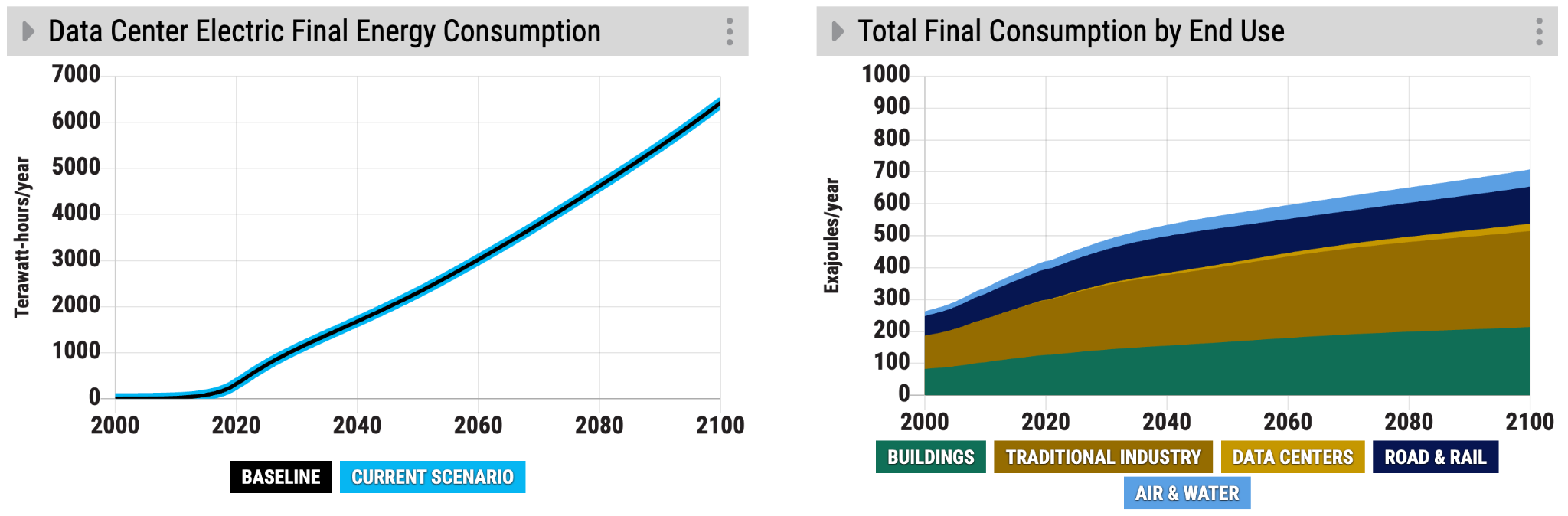
In 2026, the electric final energy consumption from data centers is roughly 810 TWh and makes up just under 1% of total final energy consumption (2.5% of global electricity consumption). In the Baseline Scenario, the annual electricity consumption from data centers grows steadily throughout the century, reaching nearly 6500 TWh of electric consumption.
To put this in perspective, look at the data center energy consumption in comparison to other end uses like buildings, traditional industry, and transport. Data centers reach just over 3% of total energy consumption in 2100.
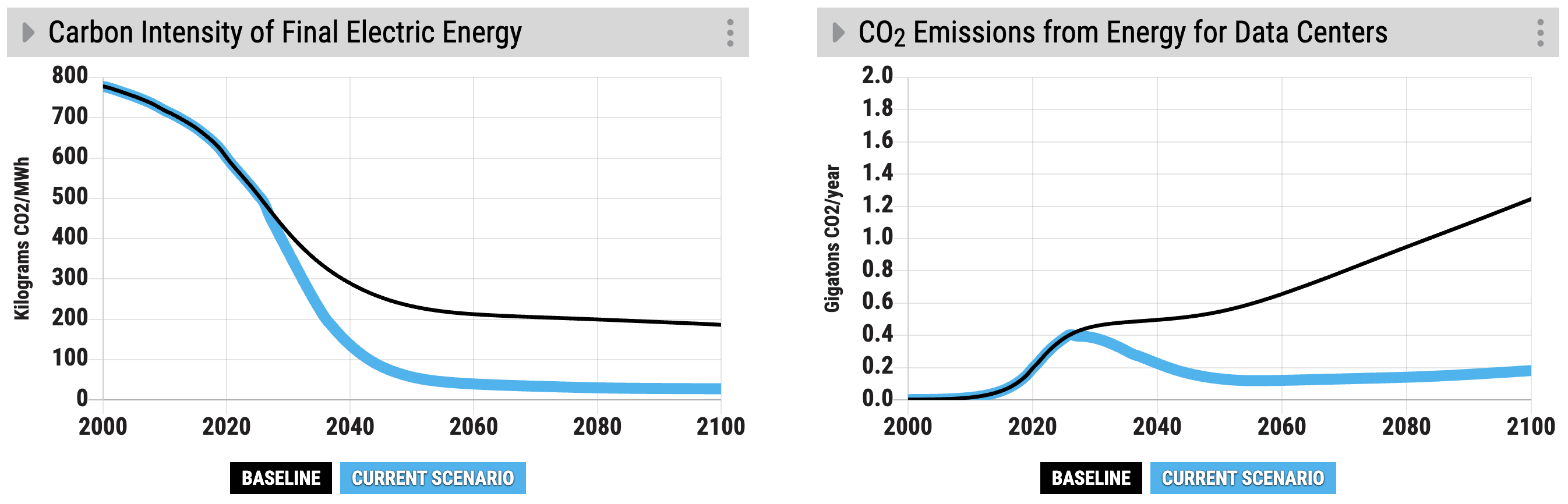
The model assumes that the energy supply for data centers is electric only and has the same energy mix as the grid. Therefore in 2026, data center operations are responsible for roughly 0.4 gigatons of CO2 emissions annually, about the annual energy emissions from Mexico in 2023.3
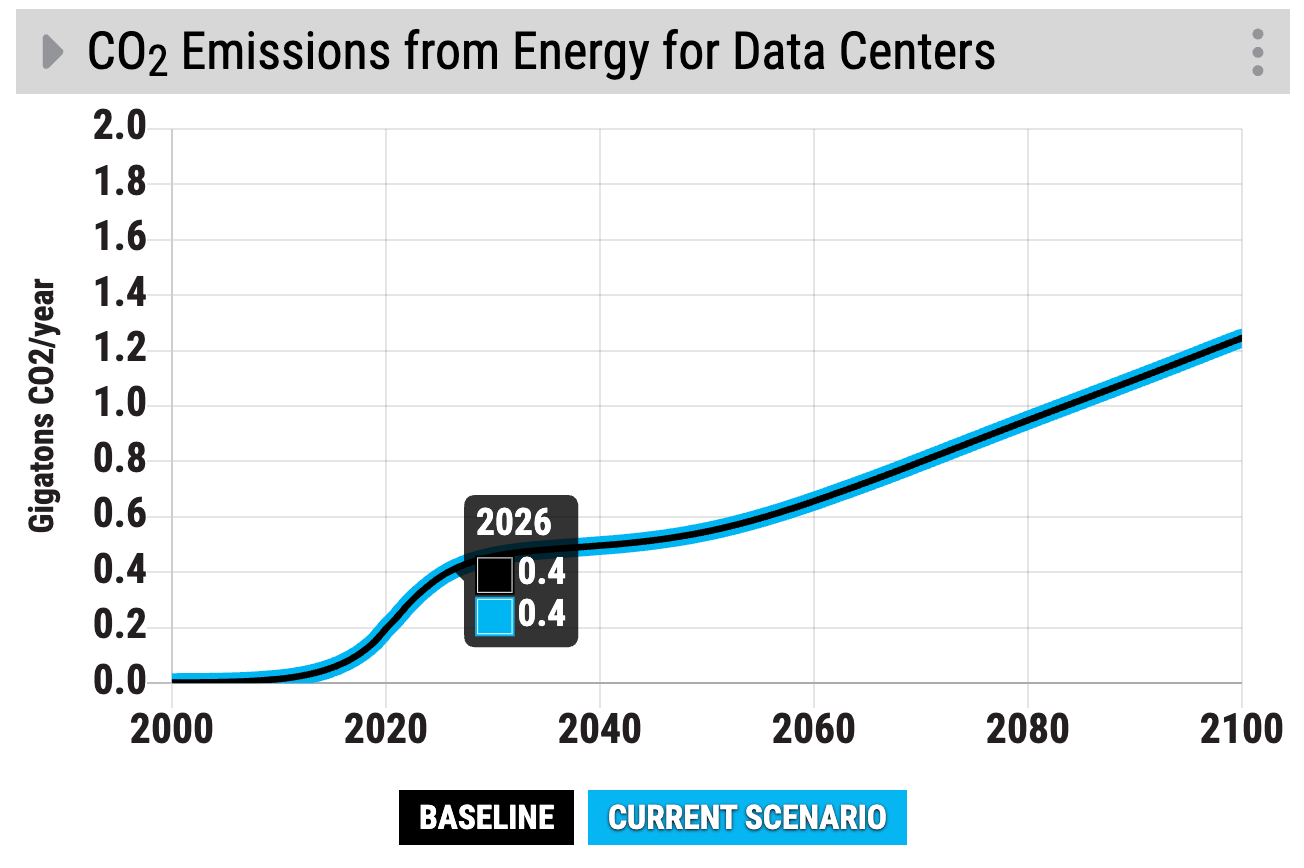
The growing electricity demand is accompanied by growing emissions to power data centers (balanced by improved efficiency and lower carbon intensity of electricity over time), reaching just over 1.25 gigatons of CO2 by 2100.
What drives data center energy demand and emissions in the Baseline Scenario?
Similar to the Kaya Identity, emissions from data center operations are the product of five driving forces with differing trends over time.

In the Baseline Scenario:
1. Global Population is growing—we are currently more than 8 billion people—and anticipate growth to 10.2 billion by the end of the century, according to UN projections.
2. GDP per Capita is growing steadily per year, and we assume it will continue, mostly as people in rapidly developing countries attain higher standards of living. Note that GDP per capita includes the economic damage from climate change.
3. Compute Intensity of GDP is the amount of computation per unit of economic output. It grows at a rapid initial rate as more experience and use cases of advanced computing diffuse throughout sectors of the economy before reaching a saturation point with diminishing diffusion in less applicable sectors.
4. Energy Intensity of Compute Capacity is decreasing with the expectation that data centers will use less energy per unit of computation over time, following current trends. This is due to R&D, experience, and other innovations such as improvements in data center design, chips, and algorithms.
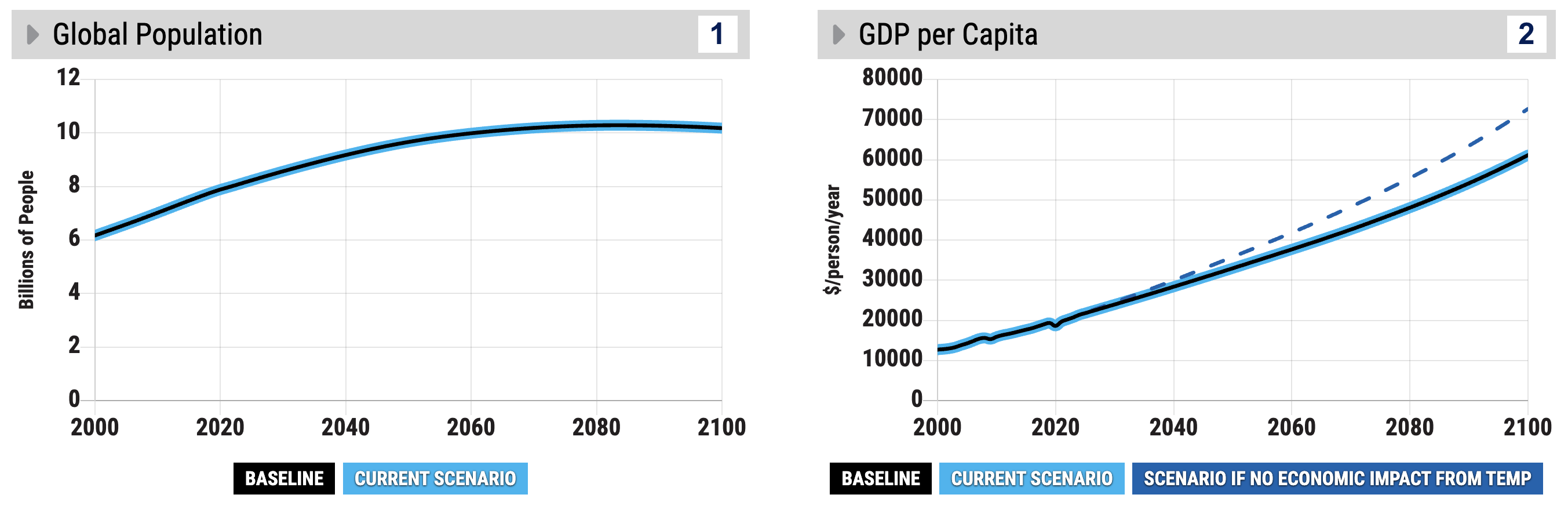
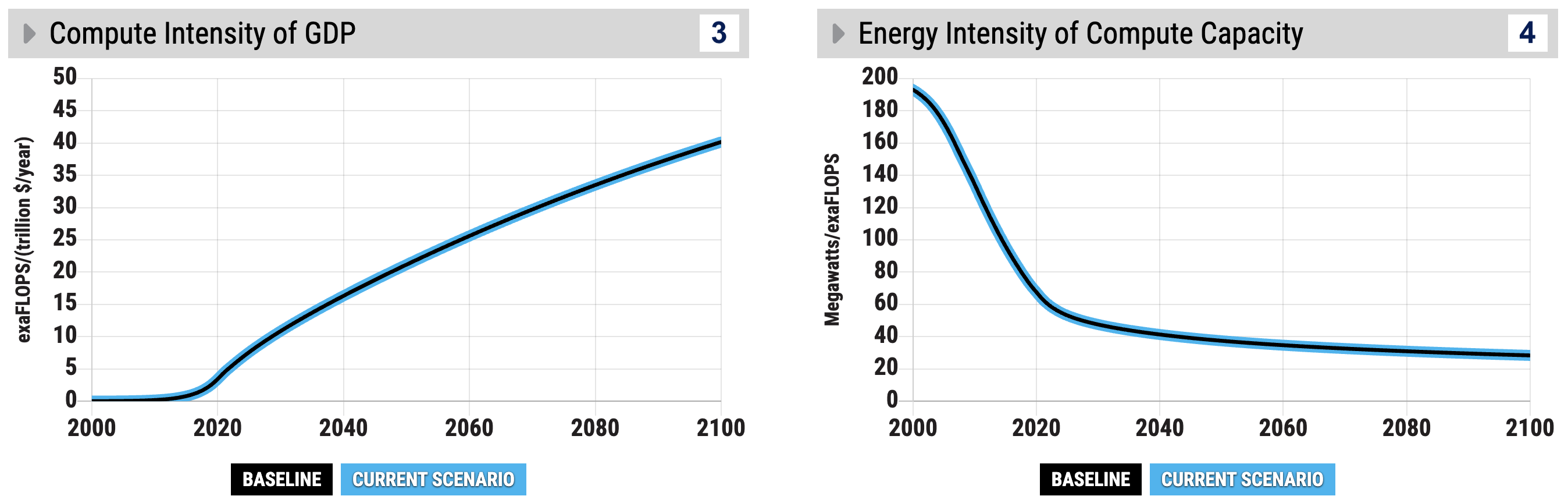


5. Data Center Electric Final Energy Consumption is the product of global population, GDP per capita, compute intensity of the economy, and the energy intensity of compute capacity.
6. Carbon Intensity of Final Electric Energy, the amount of carbon dioxide emitted per unit of electricity, is also expected to slightly decline over time as the grid becomes cleaner. Overall, this downward trend in carbon intensity is attributed to the gradual shifting away from fossil fuels and towards low-carbon energy sources.
7. CO2 Emissions from Energy for Data Centers is the product of data center electric consumption and the carbon intensity of electricity. In the Baseline Scenario, emissions from data centers are growing.
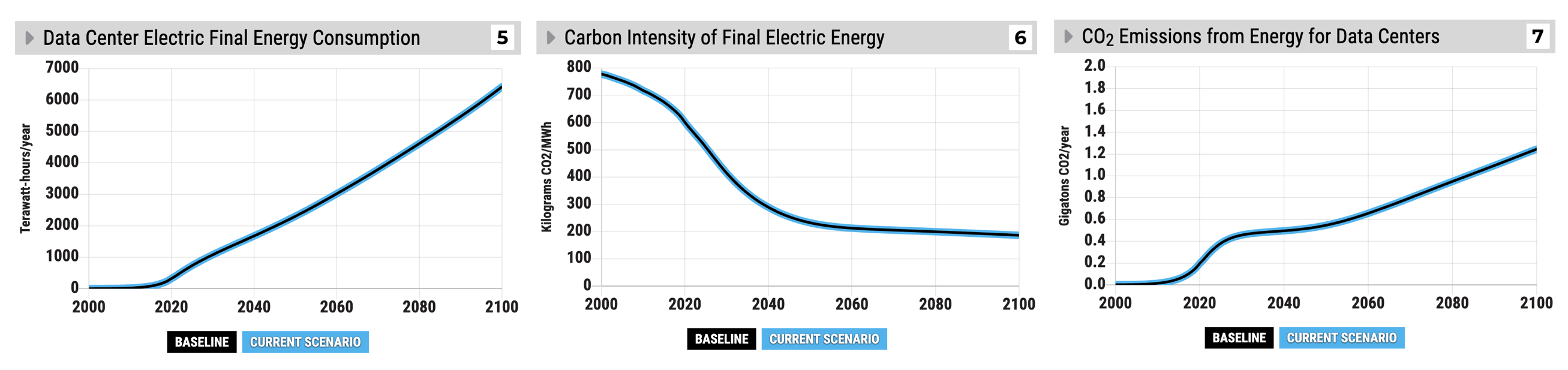
These factors explain, in simple terms, why emissions from data centers are increasing in the Baseline Scenario. Improvements in efficiency and decarbonization are not yet keeping up with the strong growth in population, GDP growth, and compute demand.
The following sections provide more detailed context.
Advanced Navigation: Data Center Growth Key Feedbacks and Assumptions
There are five key feedbacks influencing the growth of the data center industry in En-ROADS, with three reinforcing loops (R1, R2, R3) and two balancing loops (B1, B2). The growth of AI and its impacts is highly uncertain. By understanding the drivers of data center energy and emissions, as well as these key feedback mechanisms, users can explore these uncertainties in greater detail in En-ROADS by using the assumptions under Simulation > Assumptions > Economy: Data centers including artificial intelligence (AI).
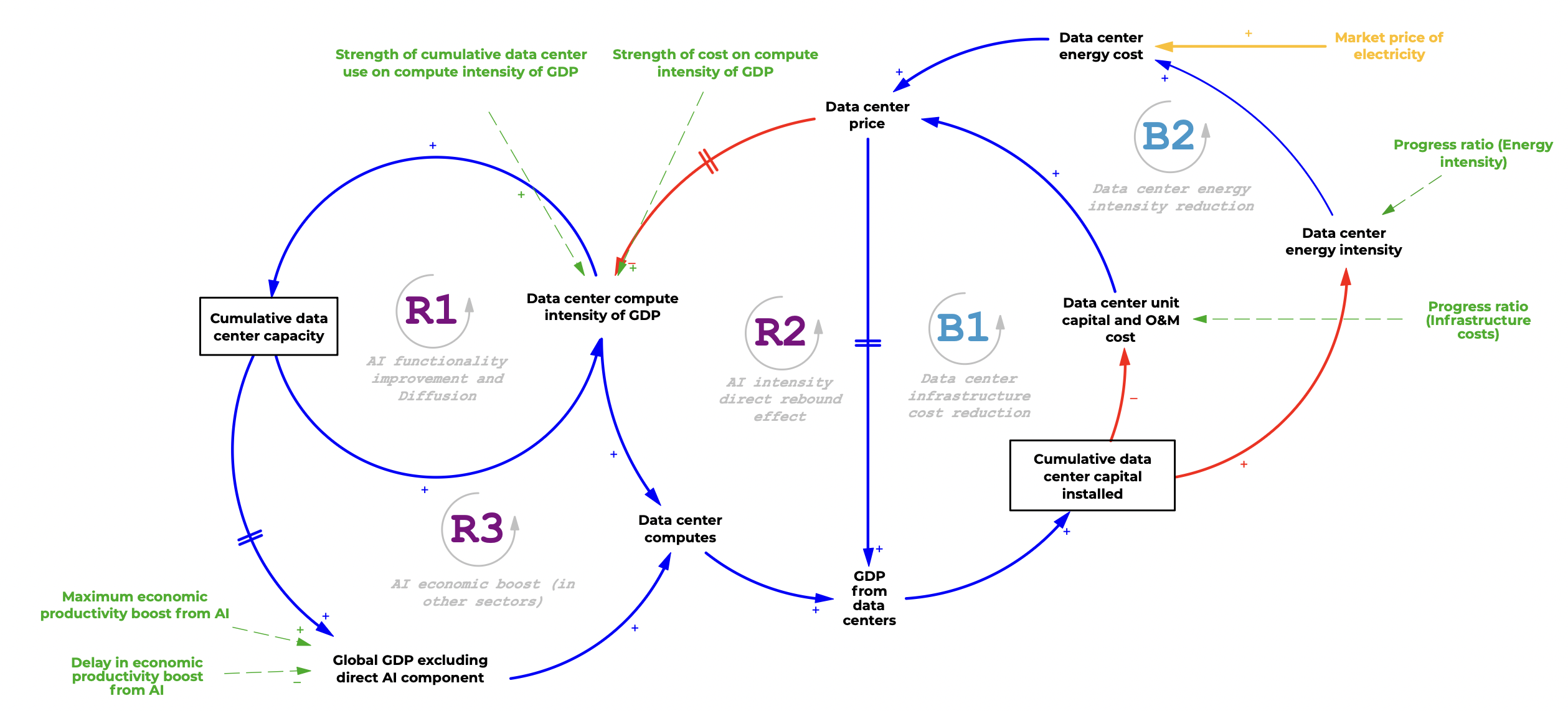

Functionality Improvement and Diffusion (R1):
Cumulative experience from the use of AI and other scaled computation is expected to improve the capabilities and applications of these technologies. With new functionality, AI use may expand to fit needs and diffuse in new end use sectors of the economy. For example, the more AI is used by businesses and the public, the more the field may discover new applications in other sectors such as medical, industry, transportation, and financial services. The strength of this reinforcing loop is controlled by the “Strength of cumulative data center use on compute intensity of GDP” assumption:

AI Intensity Direct Rebound Effect (R2):
Cumulative experience from the use of AI and other scaled computation is expected to drive down the marginal costs per unit of computation (in conjunction with balancing loops B1 and B2). AI and data center use may expand as the costs decline. The “Strength of cost on compute intensity of GDP” assumption determines how sensitive data center industry growth is to cost reductions across capital, operations, maintenance, and energy.

Data Center Infrastructure Cost Reduction (B1):
Data Center Infrastructure Cost Reduction (B1): Growth of data center capacity is balanced by cost. Through experience and economies of scale, the costs associated with capital, operations, and maintenance for data centers may decrease over time. The “Progress ratio (Infrastructure costs)” assumption determines how much non-energy operations and maintenance costs for computation fall as more capacity is installed and experience is gained, which weakens this balancing loop.

Data Center Energy Intensity Reduction (B2):
Data Center Energy Intensity Reduction (B2): Through experience and economies of scale, data centers are expected to become more efficient per unit of output over time. The “Progress ratio (Energy intensity)” assumption controls the rate at which the energy intensity of compute capacity decreases with learning and scaling (see the graph below on the left in this scenario).
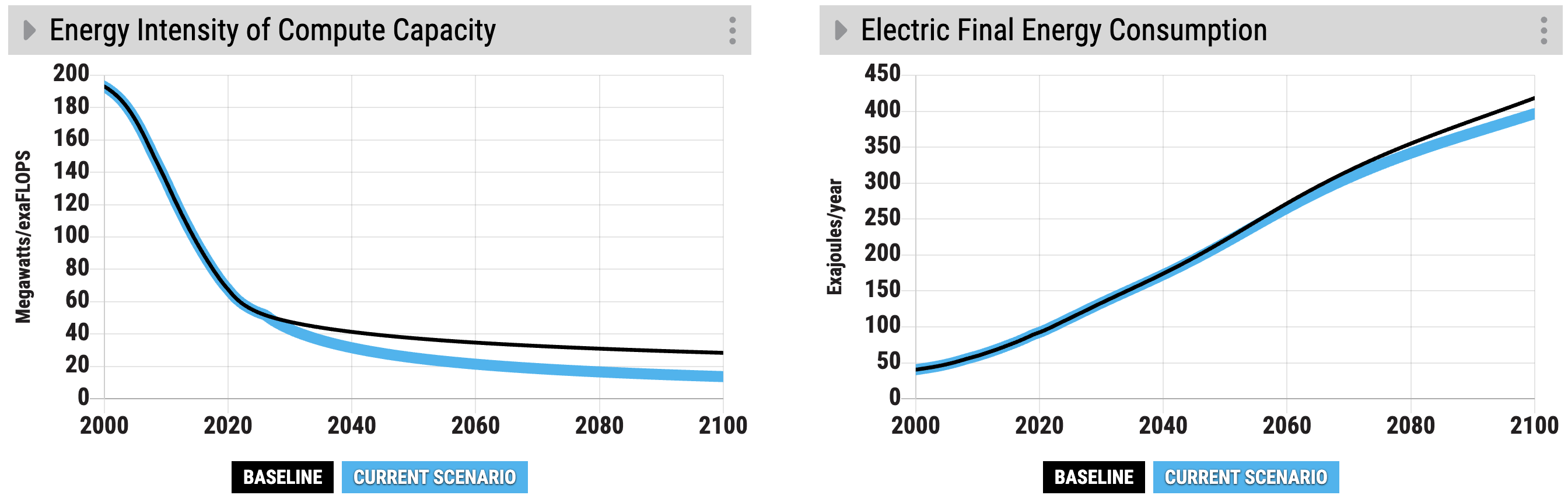

Speeding up this progress lowers the electricity consumption from data centers (see the graph above on the right). However, there is a balancing with R2 as marginal energy costs fall and drive up overall use.
AI Economic Boost (R3):
Finally, many expect AI to increase productivity across other sectors of the economy. Users can control the strength and timing of this productivity increase using the “Maximum economic productivity boost from AI” and “Delay in economic productivity boost from AI” assumptions. This impact is highly uncertain and therefore assumed to be zero in the Baseline Scenario.

Big Messages about AI and Data Centers in En-ROADS
Data centers have a growing impact on energy and emissions
As shown in the Baseline Scenario, electricity demand to power data centers is projected to grow throughout the century. This leads to rising emissions from the energy to power data centers in the absence of other action to decarbonize the electric mix. See “Data Center Electric Final Energy Consumption” and “CO2 Emissions from Energy for Data Centers” under Graphs > Demand Sectors and End Uses.
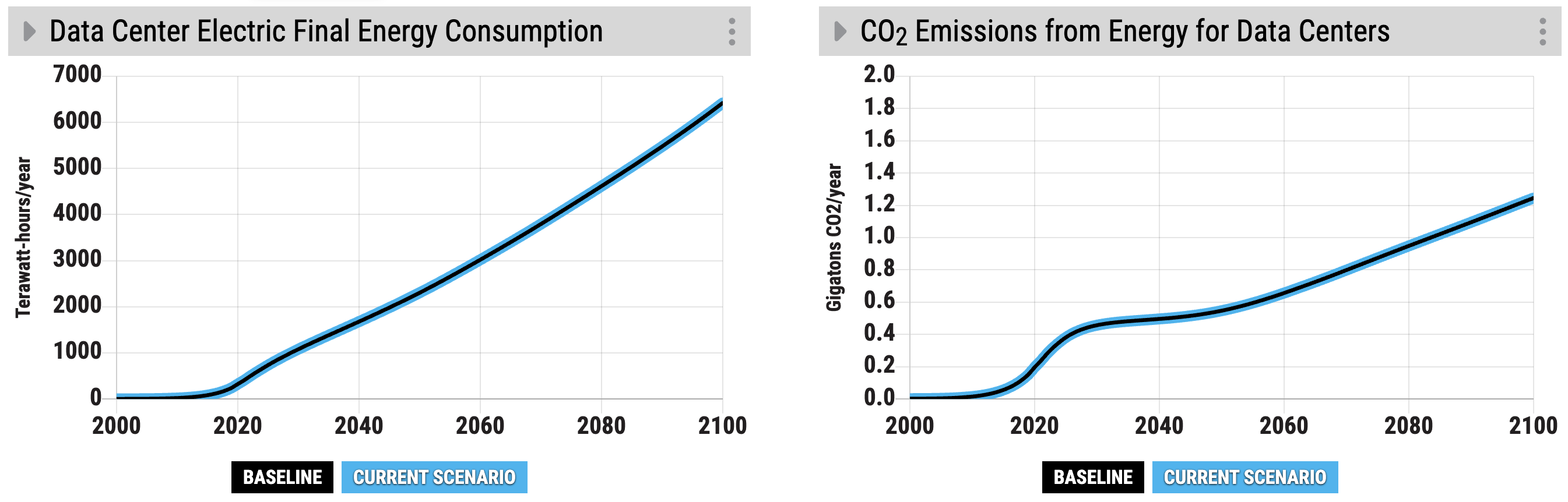
At a time when we are using up our remaining “carbon budget,” every gigaton of emissions matters. Data centers are a rapidly growing, energy-intensive industry, and as long as the carbon intensity of energy stays high, that growth accelerates how fast we spend our budget.
This highlights the importance of grid decarbonization to avoid these cumulative emissions. In En-ROADS, users can implement policies and actions to simulate a scenario with lower CO2 emissions from data centers:
- Encourage low-carbon electric sources
- Subsidize renewable and nuclear energy
- Simulate breakthroughs in battery storage cost reductions
- Discourage carbon-intensive electricity production
- Implement a carbon price or clean electricity standard
- Tax fossil fuels or remove fossil fuel subsidies
- Reduce new fossil fuel infrastructure
AI-driven productivity boosts amplify a carbon-intensive economy
Another, potentially larger, concern is how AI may drive up consumption as a whole. If we assume AI will drive productivity gains as many predict, it could result in an amplification across all sectors of the economy, like in this scenario. In the absence of other action to decarbonize our economy, emissions and temperature both rise.
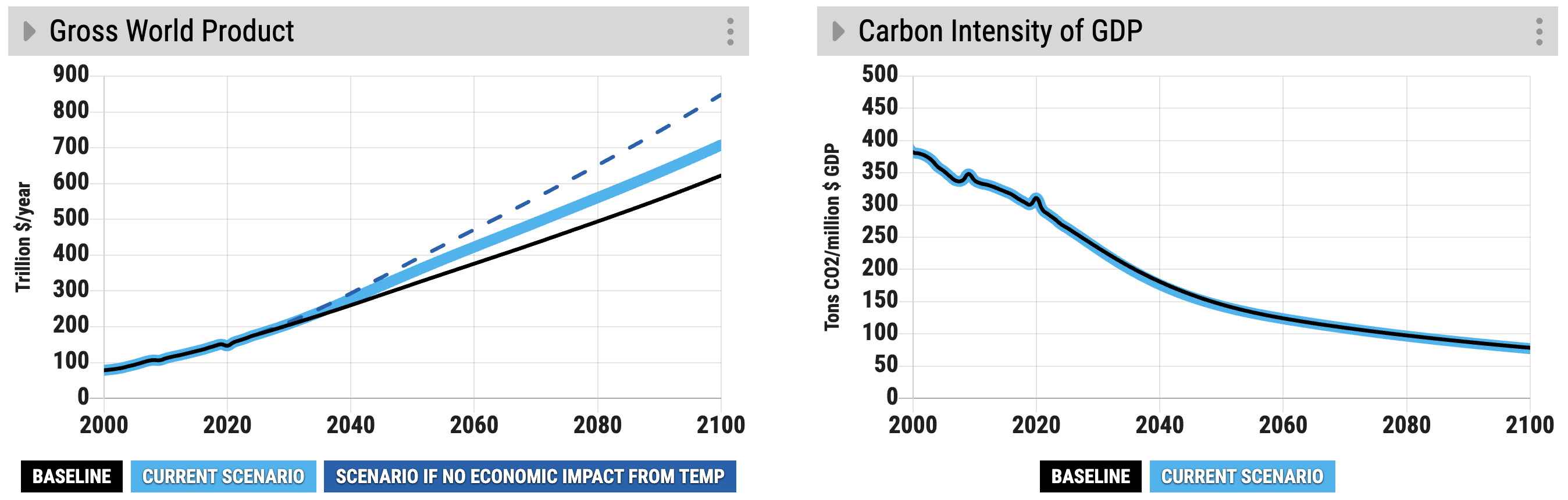
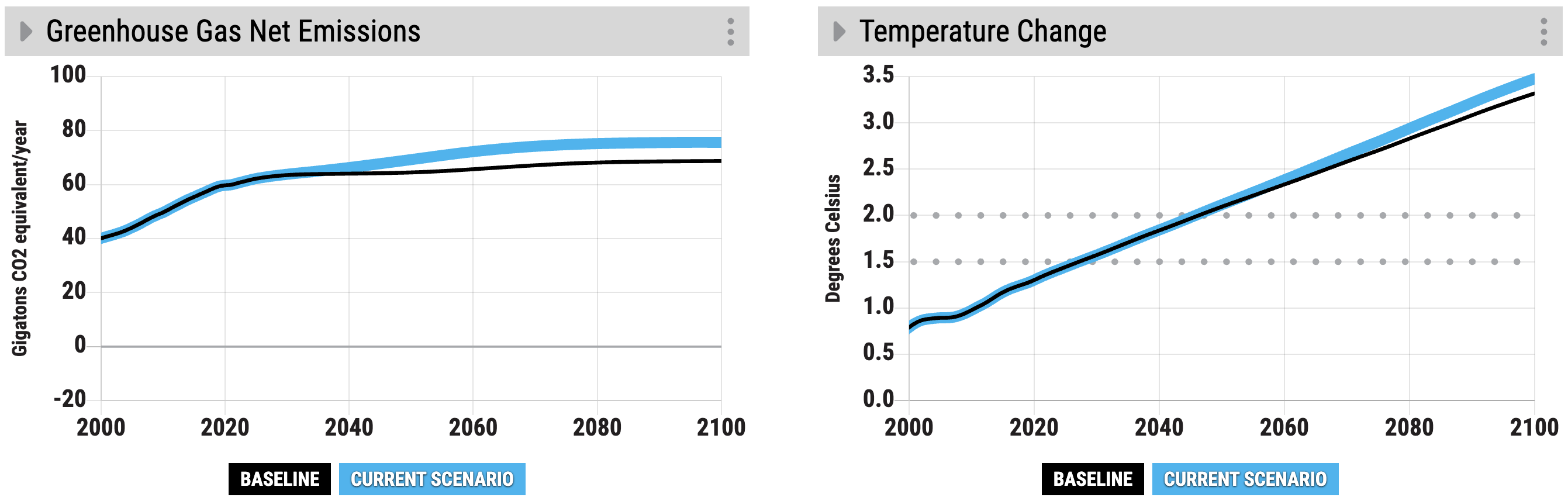
This dynamic drives home the importance of decoupling economic growth from emissions in order to avoid the worst impacts of climate change.
Delays in AI-driven climate solutions
Many think that AI will help us discover, adopt, and scale climate solutions. While En-ROADS does not model this directly, users can test this scenario by adjusting the following sliders:
- Improve energy efficiency in transport, buildings, & industry
- Simulate breakthroughs in:
- A new zero-carbon energy source
- Nuclear and renewable cost reductions
- Variable renewable energy storage cost reductions
- Address waste & leakage of superpollutants through satellite image processing
- Monitor and address deforestation through satellite image processing
- Increase the potential for demand response
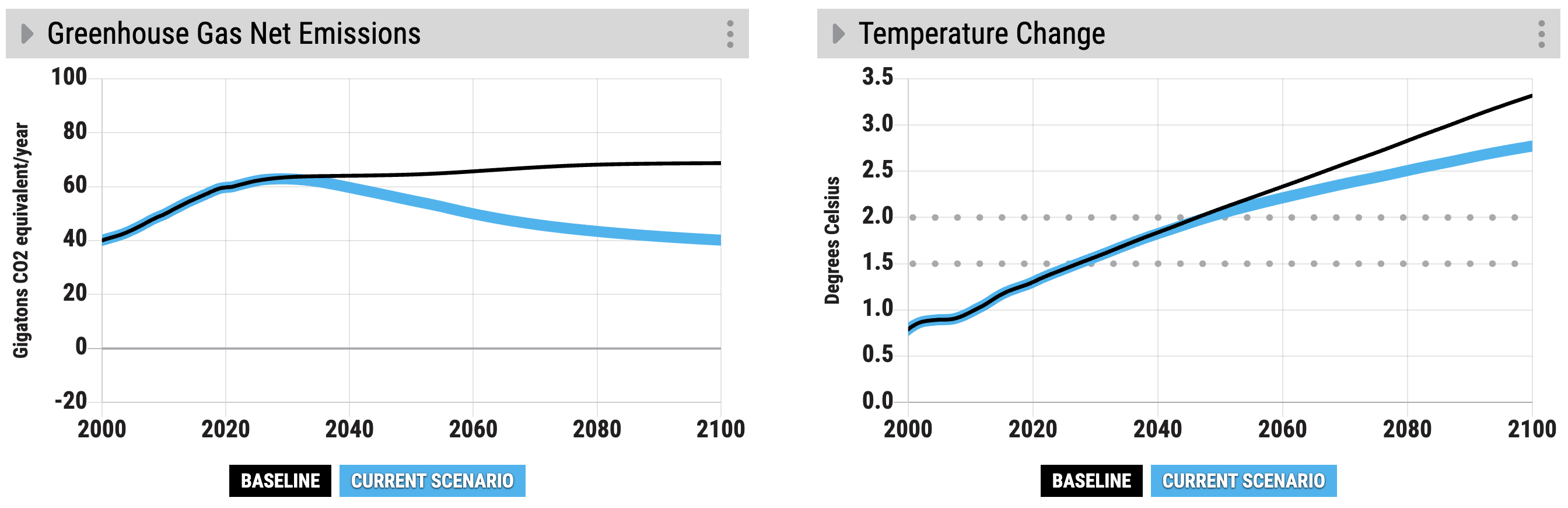
If AI boosted these actions alone, it would have significant mitigation potential. However, if AI also boosts activities across all sectors (i.e., not just climate solutions), the additional consumption driven by productivity increases eats into our gains:
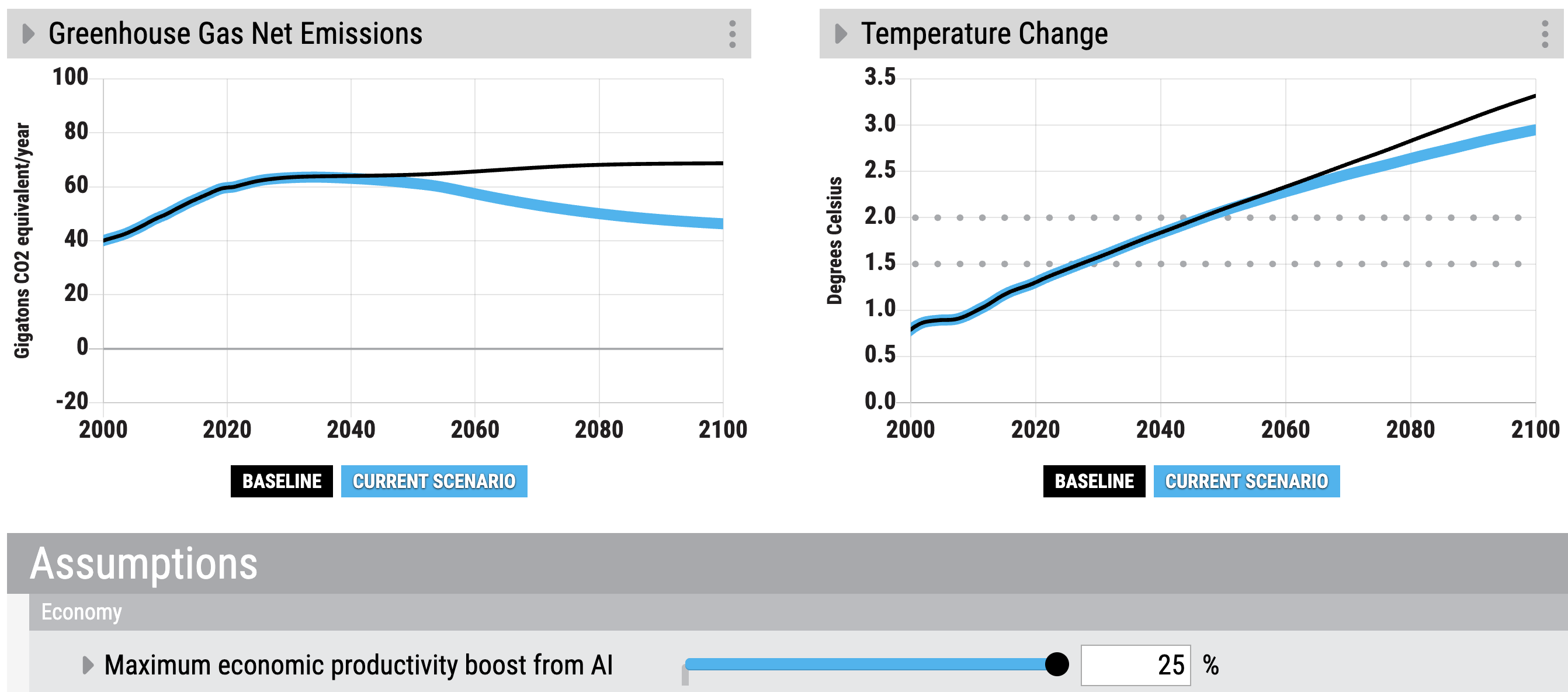
Any benefits will come with delays as AI capabilities and climate solutions scale up. In the short term, AI is likely to amplify a carbon-intensive economy and generate a carbon debt before any benefits materialize. In the long term, those benefits are expected to outweigh the debt.
Finally, fossil fuel producers may also reap the benefits of AI, which prompts the question: will all applications of AI be towards climate solutions or will heavy emitters benefit just as much, whether through efficiency gains, faster discovery of new reserves, or other advantages?
The growth of AI and data centers is highly uncertain
There are many paths forward as the world grapples with the costs and benefits of this rapidly scaling technology. While data center growth is now explicitly modeled in the Baseline Scenario, the critical assumptions are exposed with large ranges to reflect this uncertainty. En-ROADS allows users to test a wide range of mental models about the growth of the technology, its efficiency, and its impacts on other sectors of the economy.
Other social and environmental concerns
Data centers carry environmental and social costs beyond energy and emissions. Most fall outside En-ROADS's scope, but they matter for decision-makers weighing where and how data centers get built.
- Water: Data centers consume large amounts of water to keep servers cool. A large data center can consume as much as a town of 10,000 to 50,000 people.4 This is a growing concern in water-stressed regions, where data center expansion can compete with agricultural and municipal water needs.
- Air pollution: Fossil fuels, mostly coal and gas, provide nearly 60% of power to data centers.5 In addition to the CO2 emissions that the burning of these fuels generates, NOx and PM2.5 pollution cause premature death, lung disease, and other serious health outcomes. The Air Pollution from PM2.5 graphs in En-ROADS show the pollution from the use of these fuels for all end uses, including data centers.
- Electronic waste: Hardware components, which often contain hazardous materials like lead, mercury, and cadmium, have short lifetimes and they pose a risk to human health and the environment if they’re not properly disposed of.
- Material consumption: Producing a single 2 kilogram computer requires the extraction of roughly 800 kilograms of raw materials, many of which are rare earth elements concentrated in a handful of countries and often mined in environmentally destructive ways.6
- Grid strain and local electricity prices: Large data centers can sharply increase local demand and strain the regional grid. Data centers consumed more than 1.5% of the world’s electricity demand in 2025, not a staggering share on its own. But that figure hides the scale and how concentrated the demand is: some hyperscalers under construction in the U.S. are estimated to require as much electricity as 600,000 to 5 million households each once complete.7 Utilities could pass the cost of the resulting grid upgrades on to all ratepayers, raising electricity prices for households and businesses nearby.
Because hyperscale data centers tend to be geographically concentrated in clusters around cities, the surrounding communities are disproportionately affected. These equity dimensions are an important context for evaluating data center policy. Transitioning data centers to clean electricity is not only a climate imperative—it is also a matter of public health and environmental justice for the communities nearest to the facilities and the power sources that supply them.
If you have more questions about this topic, explore some of the FAQs about Data Centers and AI in En-ROADS.
Acknowledgements and Funding
Climate Interactive developed the En-ROADS data center and AI features with funding from the Hewlett Foundation. The underlying modeling was informed by numerous subject matter experts, and several En-ROADS Climate Ambassadors provided valuable testing and feedback during development.
Footnotes
1. IEA. (2025). Energy and AI.↩
2. Hannah Ritchie. (2026). How much electricity does AI consume? [2025 summary].↩
3. IEA. (2023). Energy system of Mexico.↩
4. Newsweek. (2026). Map shows where data centers are being built in drought-hit areas.↩
5. Carbon Brief. (2025). AI: Five charts that put data-centre energy use – and emissions – into context.↩
6. UNEP. (2025). AI has an environmental problem. Here’s what the world can do about that.↩
7. IEA. (2026). Key questions on energy and AI.↩